
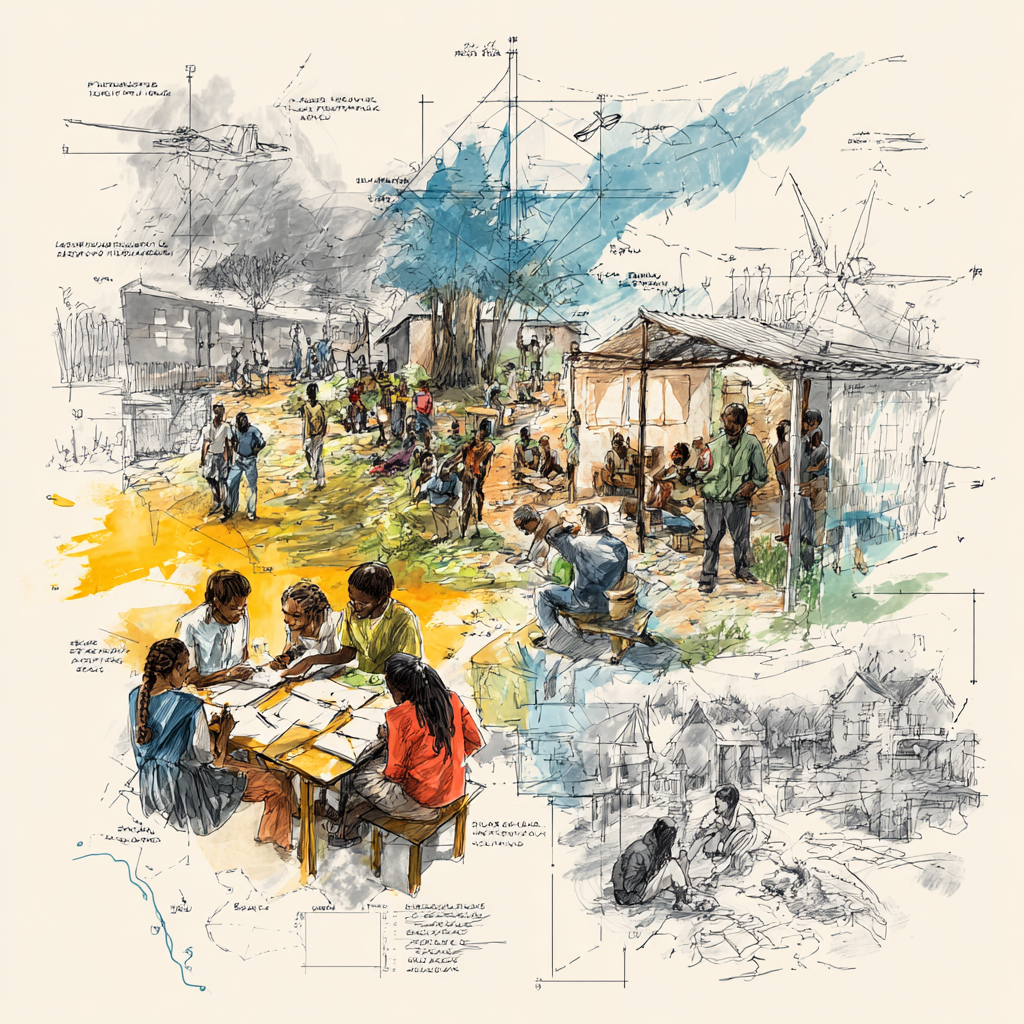
A single book rarely feels powerful enough to shift a learning community, yet many of us have witnessed moments when one well-chosen text becomes the catalyst for unexpected connection, curiosity, and collective growth. In an age where digital abundance paradoxically thins our attention, the idea of building a “village library revolution” from one book may sound idealistic. For educators, however, it raises a timely and important question: how do we rebuild local learning ecosystems when resources are uneven, time is limited, and community engagement is fragmented?
At its core, the concept of transforming a community library with one book stems from a long tradition of resource expansion in education. Research on social learning networks highlights that shared texts do more than transmit knowledge. They become anchors for communal meaning-making, relational safety, and sustained inquiry. When a community focuses collectively on one high-quality resource, the learning does not remain confined to the book itself. Instead, it expands outward into conversations, shared interpretations, linked activities, and emerging curiosity paths. This is what makes the “single resource expansion model” so compelling for educators working in diverse environments.
In practice, a book-centered ecosystem works because it lowers the entry barrier. Families, educators, and children begin from a common text, allowing even minimal resources to become a hub of shared learning. Cognitive load decreases when all participants work from familiar material, and intrinsic motivation increases when learners see how their contributions build on one another. Community libraries that adopt this approach often find that the physical book becomes less important than the social interactions formed around it.
To help educators envision how this model can work on the ground, it is useful to break the process into practical strategies.
- Establish a shared anchor text
- Choose a book that is rich in themes, accessible in language, and flexible enough to support interdisciplinary exploration.
- Encourage community members to contribute their own interpretations, questions, or personal connections. This turns the library into an active dialogue space rather than a storage facility.
- Design program layers that expand the resource
Reading Circles: Weekly gatherings where participants explore one theme at a time.
Creative Extensions: Art, writing, or performance activities based on key scenes or ideas.
Knowledge Bridges: Invite experts or local storytellers to connect the book’s themes to real-world contexts, such as ecology, social issues, or cultural heritage. - Create peer-led learning opportunities
*Appoint rotating facilitators from the community, including older students or parents.
*Allow participants to set weekly inquiry topics, fostering ownership and agency.
*Introduce a “knowledge wall” where new insights, vocabulary, or project ideas are posted for collective use. - Build a shared archive
*Digitize insights, photos of activities, or audio reflections.
*Create a communal notebook or zine documenting how the understanding of the book evolves.
*Allow the archive to serve as a map of the community’s learning journey, reinforcing the idea that knowledge is co-created and always expanding.
A real-world example illustrates the power of this approach. A small rural library in the Pacific Northwest once piloted a “one book village year” project. With only twenty copies of a single children’s novel, the library launched mixed-age reading groups, local history tie-ins, and a storytelling fair. Teachers noticed a rise not only in reading engagement but also in students’ verbal reasoning and collaborative behaviors. Families who had never visited the library became regular participants, and the library itself began to function as a learning hub rather than a passive repository. The transformation was not driven by the book alone but by the shared learning ecology built around it.
For educators, the deeper significance lies in how such models reshape our understanding of access. It is easy to assume that rich learning ecosystems require abundant resources, yet educational research repeatedly shows that what truly multiplies learning is not volume but connectivity. When one text becomes the starting node in a network of shared inquiry, it produces a form of collective intelligence that no individual element could achieve alone. In this sense, a community library revolution is less about increasing materials and more about re-weaving relationships around learning.
As you consider ways to cultivate similar ecosystems, it may help to reflect on a few guiding questions.
- How might one well-chosen book serve as an anchor for interdisciplinary learning in your context?
- What roles could community members play in expanding the text into a broader learning experience?
- Which shared rituals or routines would strengthen the psychological safety needed for open, collaborative inquiry?
- How could the library, whether physical or digital, shift from being a storage space to becoming a dynamic learning hub?
Ultimately, a village library revolution begins with reframing what a book can be. Not a finished product, but a seed. Not a solitary reading experience, but a shared cultural event. The most transformative libraries of the future will likely be those that blend minimal physical resources with maximal human collaboration, allowing even one book to spark a learning ecology that grows far beyond its pages.
When communities discover that knowledge can be expanded collectively, the library becomes more than a building. It becomes a living system, one that educators can help cultivate with intentional design, thoughtful facilitation, and a belief in the generative power of shared learning.
[ To Fathom Your Own Ego, EGOfathomin ]