
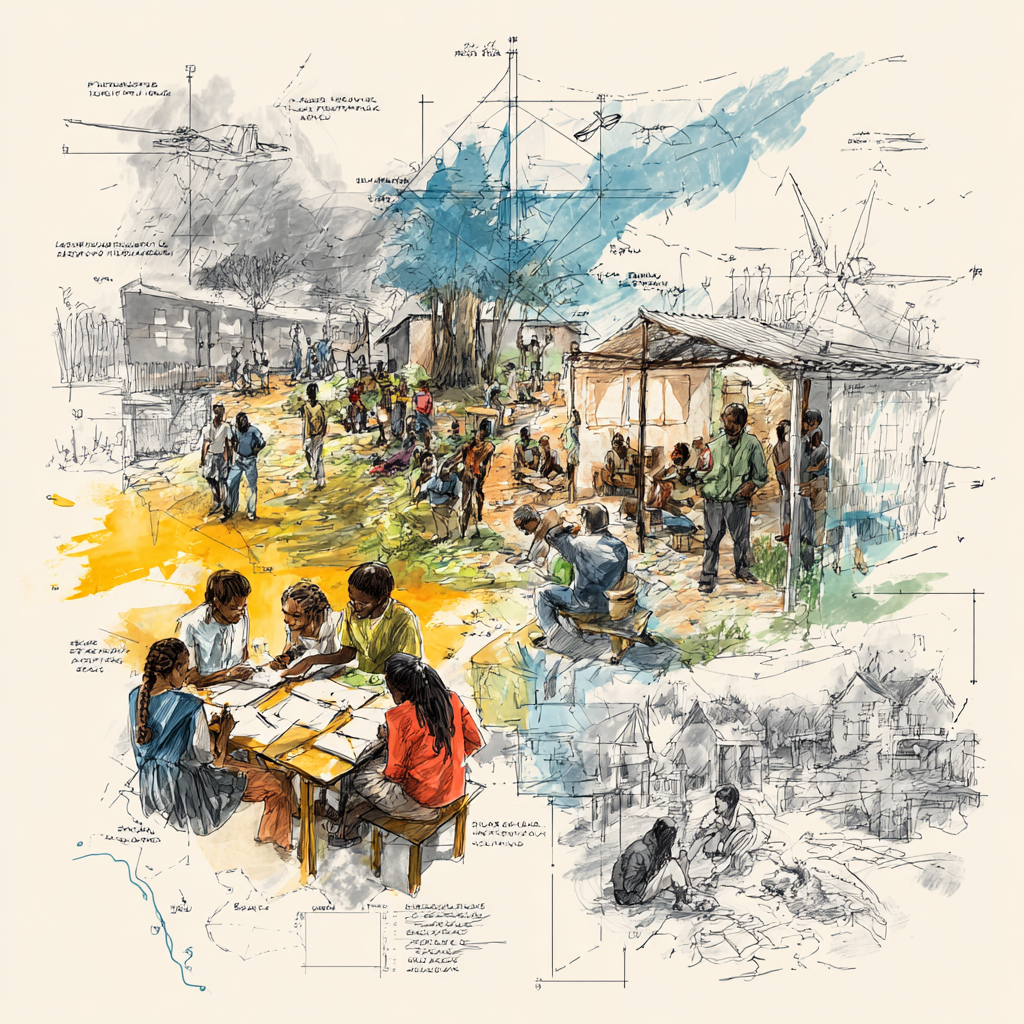
In many schools, learning still happens primarily inside four walls, under artificial light, mediated by textbooks and screens. Yet just beyond those walls exists the most complex, integrated, and authentic learning system humanity has ever known, the natural environment. At a time when students struggle with disengagement, fragmented thinking, and abstract knowledge that feels disconnected from life, ecology-based education offers a fundamentally different path forward. It does not add content to an already crowded curriculum. It changes the medium of learning itself.
For educators, the question is no longer whether nature-based learning is valuable. The more urgent question is how deliberately and rigorously we design learning experiences that treat nature not as a backdrop for occasional field trips, but as a primary instructional tool.
The Educational Logic Behind Ecology-Based Learning
Ecology-based education is grounded in a simple but powerful premise: learning deepens when cognition is embedded in real systems. Natural environments provide what no classroom simulation can fully replicate, interdependence, uncertainty, feedback, and time-based change.
From a learning science perspective, this approach aligns with several well-established principles. Experiential learning theory emphasizes that knowledge is constructed through direct experience and reflection. Situated cognition shows that understanding is inseparable from the context in which it is developed. Observation-based learning strengthens pattern recognition, causal reasoning, and systems thinking, capacities that are increasingly essential across disciplines.
Ecological literacy, often misunderstood as environmental knowledge alone, is more accurately the ability to read relationships. When learners observe soil composition affecting plant growth, insect behavior responding to temperature shifts, or water flow shaping land patterns, they are practicing integrated reasoning. This form of learning naturally bridges science, mathematics, language, ethics, and even leadership thinking.
Why Observation Matters More Than Explanation
One of the most overlooked aspects of modern education is how rarely students are asked to truly observe. In classrooms dominated by explanation, slides, and predetermined answers, learners often bypass the cognitive work of noticing, questioning, and hypothesizing.
Observation-based learning in natural settings reverses this pattern. Nature does not explain itself. It requires patience, attention, and inference. This is precisely why it is such a powerful teacher.
When educators structure learning around guided observation, students are compelled to slow down, record what they see, compare patterns over time, and articulate relationships in their own words. This process strengthens metacognition and builds intellectual humility, an essential trait for lifelong learning.
Practical Applications for Educators
Ecology-based education does not require remote forests or large budgets. It requires intentional design. Below are practical ways educators can integrate natural environments into formal learning.
- Structured Observation Walks
Design regular observation sessions in nearby outdoor spaces, schoolyards, parks, or even urban streets. Provide students with focused prompts, such as tracking changes in one living organism over time or mapping interactions between non-living and living elements. - Field Journaling as Core Assessment
Replace some traditional worksheets with observation journals. Ask learners to document patterns, questions, sketches, and reflections. Assess depth of noticing and reasoning rather than correctness alone. - Cross-Disciplinary Integration
Use natural data for mathematics, measurement, ratios, growth rates. Use observations as prompts for descriptive and analytical writing. Encourage scientific explanation grounded in real phenomena. - Seasonal Learning Cycles
Plan learning objectives around seasonal changes. This introduces time as a variable, helping learners understand delayed outcomes, cycles, and long-term cause and effect. - Student-Generated Questions
After observation sessions, require students to generate investigable questions. This shifts cognitive ownership from teacher to learner and strengthens inquiry skills.
A Real-World Example from Practice
In one middle school program I observed, educators redesigned a science and language arts unit around a neglected green space behind the school. Instead of starting with textbook chapters on ecosystems, students began with weekly observation walks. They tracked plant diversity, soil moisture, insect activity, and human impact.
Over time, patterns emerged. Students noticed that certain plants thrived near footpaths while others declined. This led to discussions about compaction, water runoff, and human behavior. In language arts, students wrote evidence-based essays arguing whether the space should be preserved, redesigned, or left untouched.
The result was not only higher engagement, but more coherent reasoning. Students cited real observations, used precise language, and demonstrated systems-level thinking. Most importantly, learning felt consequential.
Reflection Questions for Educators
As colleagues, it is worth pausing to reflect on our own practice.
- How often do my students learn from direct observation rather than explanation?
- In what ways does my curriculum allow learners to encounter uncertainty and complexity?
- Do my assessments value noticing, reasoning, and questioning, or primarily recall?
- What nearby environments could become regular learning sites rather than occasional destinations?
These questions are not about adding more work. They are about redesigning learning priorities.
Looking Forward: Education Rooted in Reality
As artificial intelligence accelerates access to information, the value of education will increasingly lie not in content delivery, but in sense-making. Ecology-based education prepares learners for this future by cultivating attention, pattern recognition, and ethical awareness grounded in real systems.
For educators, using natural environments as learning tools is not a nostalgic return to outdoor schooling. It is a forward-looking strategy that aligns learning with how humans actually understand the world. When nature becomes a co-teacher, learning becomes integrated, durable, and deeply human.
[ To Fathom Your Own Ego, EGOfathomin ]