
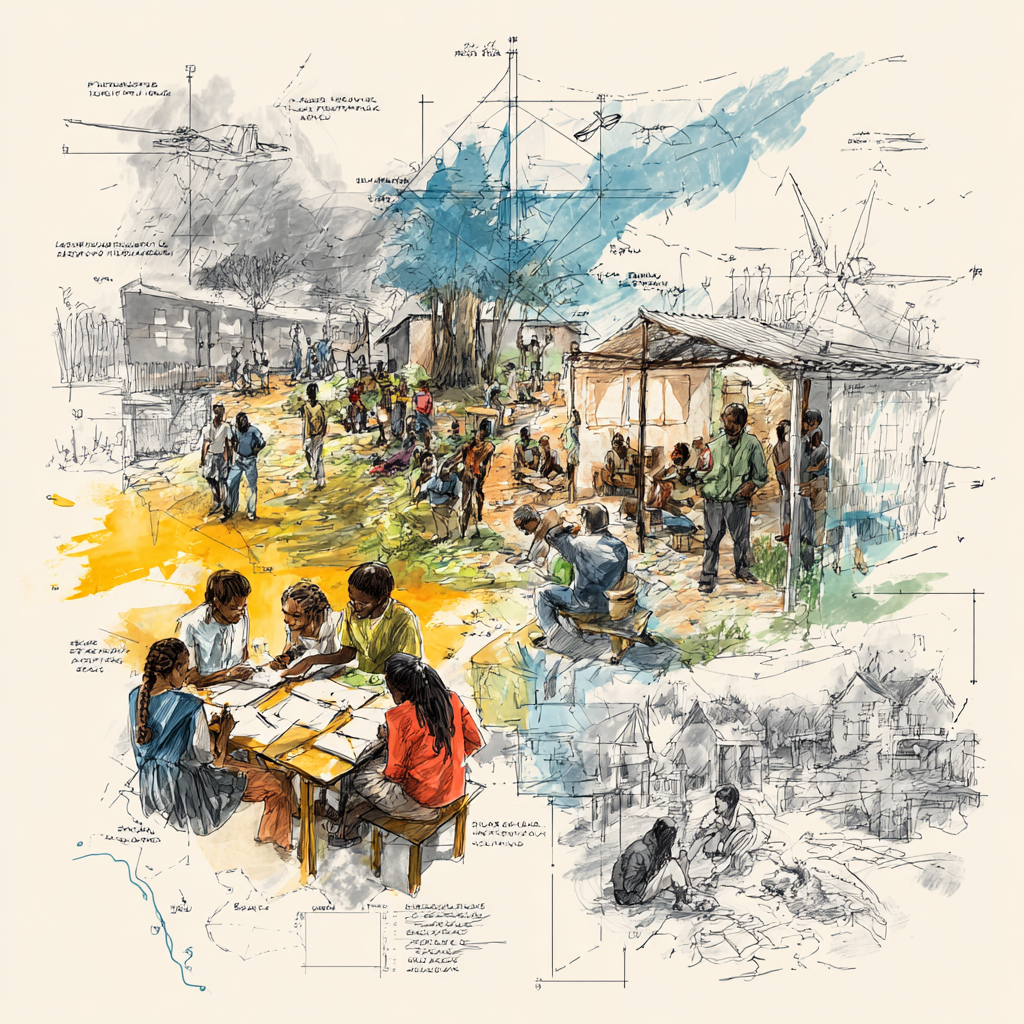
Educational inequality rarely appears as a single dramatic gap. More often, it accumulates quietly through distance, infrastructure limits, and uneven access to qualified instruction. In many regions, schools exist in name but not in function, constrained by geography, population decline, disaster, or resource concentration. Mobile classrooms emerged not as a technological novelty, but as a pragmatic response to a simple question educators continue to face. How do we bring learning to students when students cannot reasonably come to learning?
Mobile classrooms reverse the traditional logic of schooling. Instead of expecting learners to adapt to fixed institutions, education adapts to learners’ contexts. This shift is not merely logistical. It represents a deeper rethinking of educational equity, instructional design, and the role of schools within communities.
Educational Foundations of Mobile Classroom Models
From a learning psychology perspective, access precedes motivation. Decades of research on opportunity to learn confirm that disparities in exposure, not ability, account for a significant portion of achievement gaps. When learners face long travel times, unsafe routes, or inconsistent schedules, cognitive engagement declines before instruction even begins.
Mobile classrooms align with situated learning theory, which emphasizes that knowledge is constructed within real contexts rather than abstract spaces. When learning environments are embedded directly into communities, farms, factories, shelters, or remote villages, instruction gains immediate relevance. Learners are not removed from their realities to learn. Learning enters their realities.
There is also a strong alignment with ecological models of education. Schools are not isolated systems. They interact with transportation networks, local economies, family structures, and social services. Mobile classrooms intentionally position education within this broader ecosystem, reducing friction between schooling and daily life.
What Defines an Effective Mobile Classroom
Not all mobile classrooms succeed. The effectiveness of these models depends on design choices that go beyond placing desks inside vehicles. Successful cases share several defining characteristics.
First, instructional intentionality. Mobile classrooms are not touring lectures. They operate with clear curricular goals, pacing frameworks, and assessment strategies adapted to short but intensive instructional cycles.
Second, contextual relevance. Instruction leverages the immediate environment. A mobile science classroom parked near agricultural land integrates soil analysis and water testing. A mobile digital lab in an industrial area focuses on applied technology and workforce skills.
Third, relational continuity. While the classroom moves, relationships should not. Effective models assign consistent educators to specific routes or regions, allowing trust and instructional momentum to develop over time.
Finally, logistical reliability. Predictable schedules, maintenance planning, and community communication are as critical as pedagogy. When mobility becomes unpredictable, learning stability collapses.
Practical Applications for Educators and Program Designers
Educators considering mobile classroom initiatives often ask how teaching practice changes within these environments. The following applications highlight common patterns observed across successful programs.
- Instructional Design
- Lessons structured in modular units, typically 60 to 120 minutes.
- Clear entry routines and exit reflections to anchor short sessions.
- Emphasis on hands-on tasks over extended lectures.
- Curriculum Focus
- Core skills prioritized, literacy, numeracy, digital fluency.
- Interdisciplinary projects connected to local contexts.
- Flexible pacing, allowing repetition across visits.
- Assessment Practices
- Formative observation replaces high-stakes testing.
- Learning artifacts collected digitally or physically over time.
- Progress tracked longitudinally despite short encounters.
- Community Integration
- Local stakeholders involved in scheduling and content relevance.
- Use of shared spaces, markets, community centers, worksites.
- Coordination with social services when educational barriers emerge.
- Technology Use
- Self-contained power and connectivity systems.
- Offline-capable learning platforms prioritized.
- Shared devices rather than one-to-one ownership models.
A Real-World Example of Mobile Classroom Impact
In a sparsely populated rural region of northern Europe, secondary-level science instruction had become unsustainable due to declining enrollment. Rather than closing schools entirely, the regional authority deployed a mobile STEM classroom, a retrofitted bus equipped with lab stations and digital tools.
The bus followed a fixed weekly route, visiting five villages. Students remained enrolled in their local schools, but advanced science instruction was delivered on-site. Over three years, participation in upper-level science courses increased significantly, and teacher recruitment improved due to reduced isolation. Most notably, students reported stronger motivation, citing the novelty and relevance of applied experiments conducted within their own communities.
This case illustrates a critical insight. Mobility can enhance, not dilute, academic rigor when aligned with thoughtful instructional design.
Logical Implications for Educational Equity
Mobile classrooms challenge the assumption that equal education requires identical facilities. Equity is not achieved by uniformity, but by responsiveness. When systems insist on static models, they often unintentionally privilege urban density and economic concentration.
By contrast, mobile classrooms function as equity multipliers. A single well-designed unit can serve multiple underserved communities, reallocating instructional expertise where it is most needed. This does not replace permanent schools. It complements them, extending reach without replicating cost structures.
For educators, this requires a mindset shift. Teaching in a mobile environment demands adaptability, precision, and a strong sense of instructional purpose. Yet it also offers a rare opportunity to reconnect schooling with lived experience.
Reflection Questions for Educators
As colleagues reflect on mobile classroom models, several questions may help ground decision-making.
Which learners in your system face the greatest access barriers, and are those barriers structural or instructional?
How might curriculum change if instruction were delivered directly within community spaces?
What professional competencies do educators need to teach effectively in mobile settings?
How can assessment honor continuity when instruction occurs intermittently?
What partnerships would be necessary to sustain such a model long term?
Moving Forward, Mobility as a Core Design Principle
Mobile classrooms should not be seen as temporary fixes for exceptional circumstances. They represent a broader design philosophy, education as a service that moves, adapts, and responds. As demographic shifts, climate events, and economic transitions reshape where and how people live, static schooling models will increasingly struggle to keep pace.
For education systems committed to reducing regional gaps and expanding access, mobility is not a compromise. It is a strategic choice. The challenge ahead lies not in proving that mobile classrooms can work, but in designing them with the same rigor, intentionality, and respect we afford permanent institutions.
[ To Fathom Your Own Ego, EGOfathomin ]