

In many policy discussions, low online access is framed as an unequivocal disadvantage. The absence of high-speed internet, learning platforms, and digital tools is often equated with educational deprivation. Yet, in practice, educators working in digitally limited regions frequently observe a counterintuitive pattern. Under certain conditions, these environments foster deeper concentration, stronger learning habits, and more sustained intellectual engagement than their highly connected counterparts. This paradox deserves careful examination, not as a romanticization of scarcity, but as a serious pedagogical insight.
The question is not whether digital access matters. It does. The more important question is how the absence of constant connectivity reshapes the learning environment and, in some cases, strengthens it.
Why This Paradox Matters for Educators
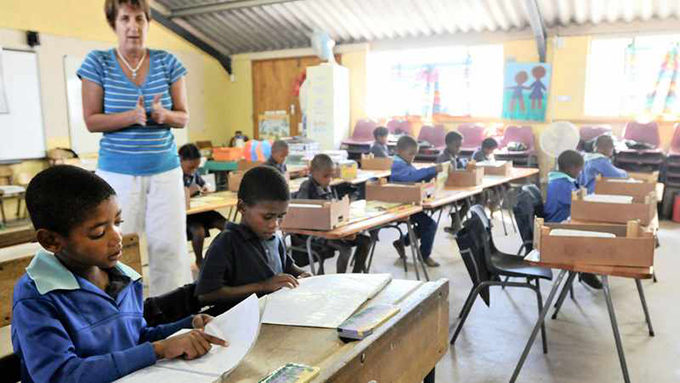
Educators today operate under the assumption that more tools lead to better outcomes. However, classrooms saturated with devices often struggle with fragmented attention, shallow engagement, and a reliance on external stimulation. In contrast, classrooms in low-access regions tend to exhibit fewer interruptions, clearer routines, and a stronger emphasis on sustained effort.
For educators concerned with depth of understanding rather than speed of content delivery, this paradox offers a valuable lens. It challenges us to reconsider what actually supports learning at its core.
The Educational Principles Behind Offline Strength
Several well-established learning theories help explain why limited digital access can, under the right conditions, enhance learning quality.
First, cognitive load theory reminds us that working memory is finite. Constant notifications, multitasking, and rapid content switching increase extraneous cognitive load. Offline environments naturally reduce this burden, allowing learners to devote more mental resources to the task itself.
Second, research on deep work and attention suggests that uninterrupted time blocks are essential for higher-order thinking. Offline settings often enforce these blocks structurally, not by policy, but by circumstance.
Third, self-regulation theory highlights the importance of internal control over learning. When external stimuli are minimized, learners are compelled to develop persistence, planning, and metacognitive awareness. These skills are difficult to cultivate in environments where distraction is always one click away.
Finally, sociocultural learning perspectives emphasize the role of shared physical space. In offline classrooms, peer presence and teacher guidance become central learning drivers rather than peripheral supports.

Practical Applications for Classrooms and Learning Spaces
The goal is not to eliminate technology, but to intentionally borrow the strengths of offline environments. Educators can translate these principles into practice through deliberate design choices.
- Design for sustained focus
- Schedule longer, uninterrupted learning blocks.
- Reduce task switching within a single lesson.
- Use fewer, more purposeful materials.
- Remove non-essential stimuli
- Limit background media and device usage during core instruction.
- Create visually calm classroom spaces.
- Establish clear norms around attention and silence.
- Strengthen offline routines
- Prioritize handwritten problem-solving and note-taking.
- Use physical texts for close reading and annotation.
- Encourage verbal reasoning and discussion before digital submission.
- Leverage teacher presence
- Provide immediate, human feedback instead of delayed digital responses.
- Model thinking processes aloud.
- Circulate actively to observe learning in real time.
- Build depth through fewer tasks
- Assign fewer problems, but require deeper explanations.
- Emphasize reasoning over completion.
- Revisit concepts across multiple sessions.
A Real-World Example from Practice
In a rural secondary school with unreliable internet access, teachers initially viewed connectivity limitations as a major obstacle. Online resources were scarce, and digital platforms were inconsistent. However, over time, a distinct learning culture emerged.
Students spent extended periods working through complex problems without interruption. Group discussions became longer and more analytical. Teachers reported that students demonstrated stronger recall and clearer conceptual explanations than peers in nearby, fully connected schools.
When limited digital tools were eventually introduced, they were used selectively, primarily for research and final synthesis, not for constant engagement. Academic outcomes improved steadily, but more importantly, students displayed confidence in tackling unfamiliar problems independently.
This was not despite low online access, but partly because of it.
Reflection Questions for Educators
As professionals, reflection is where insight becomes action. Consider the following questions in relation to your own context.
- Which digital tools in my classroom genuinely deepen understanding, and which merely increase activity?
- Where might my students benefit from longer periods of uninterrupted focus?
- How can I intentionally design moments of productive constraint?
- What learning behaviors do I see emerging when distractions are reduced?
- How might offline practices complement, rather than compete with, digital resources?

Looking Forward, Rethinking Access and Quality
The future of education should not be framed as a simple binary between online and offline. The lesson from low-access regions is not that technology is unnecessary, but that learning quality depends on structure, intention, and environment more than on tools alone.
As educators, our responsibility is to design learning spaces, digital or physical, that protect attention, encourage depth, and foster intellectual resilience. In that sense, the paradox of low online access offers a powerful reminder. Sometimes, less noise creates more learning.
By studying and adapting the strengths of offline environments, we can build more balanced, effective educational models for all learners.
[ To Fathom Your Own Ego, EGOfathomin ]