There is a quiet but powerful truth in education: culture does not change through policy first, it changes through practice. And practice, more often than not, begins with a single classroom.
Most school reform efforts aim wide, targeting systems, standards, or institutional structures. Yet in reality, students experience education locally, through the daily interactions, expectations, and emotional climate created by individual teachers. This raises a critical question for educators: Can one teacher meaningfully influence the broader educational culture? The answer, grounded in both research and lived experience, is yes, but only through deliberate and strategic action.
The Principle: Culture Is Built Through Repeated Experience
Educational culture is not an abstract concept. It is the accumulation of repeated patterns, how students are spoken to, how mistakes are handled, how curiosity is rewarded or dismissed. Over time, these patterns solidify into norms.
Research in learning psychology consistently highlights the role of micro-environments. A classroom operates as a semi-independent ecosystem, where norms can diverge significantly from the broader institution. When a teacher consistently models a different set of expectations, higher trust, deeper thinking, or stronger student agency, students internalize these norms quickly.
More importantly, these localized shifts often become visible. Students talk. Colleagues observe. Administrators notice outcomes. Culture, in this sense, spreads not by mandate but by demonstrated credibility.
Strategy 1: Redefine Classroom Norms with Precision
Cultural change begins with clarity. Vague aspirations such as “positive classroom” or “student-centered learning” are insufficient. What matters is how these ideas translate into observable behaviors.
Effective teachers operationalize culture through specific routines:
- Normalize intellectual struggle
- Publicly value incorrect answers as part of reasoning
- Use language such as “Let’s examine this thinking” instead of “That’s wrong”
- Shift authority toward thinking, not answers
- Ask follow-up questions rather than confirming correctness immediately
- Encourage students to evaluate each other’s reasoning
- Design participation structures deliberately
- Rotate speaking opportunities systematically
- Use think-pair-share or structured dialogue protocols
When these practices are consistent, students begin to redefine what “learning” means. This is the first layer of cultural transformation.
Strategy 2: Make Learning Visible and Shareable
A classroom culture gains influence only when it becomes visible beyond its walls. This requires intentional documentation and communication.
- Capture evidence of learning processes
- Display student thinking, not just final answers
- Use before-and-after examples to show growth
- Invite observation and dialogue
- Open the classroom to peer observation
- Share lesson designs and reflections with colleagues
- Leverage informal influence channels
- Conversations in staff rooms
- Collaborative planning sessions
- Professional learning communities
Colleagues are more likely to adopt new practices when they see tangible results rather than abstract claims. Influence, in this sense, is built through transparency.
Strategy 3: Align Innovation with Student Outcomes
One common mistake in educational innovation is focusing too heavily on method rather than impact. For a teacher’s influence to extend, it must be anchored in outcomes that others value.
- Connect practices to measurable changes
- Improved student engagement levels
- Higher quality of student explanations
- Increased persistence in challenging tasks
- Use student voice as evidence
- Collect feedback on how students perceive the learning environment
- Highlight shifts in student confidence and autonomy
When innovation is clearly linked to improved outcomes, it becomes difficult for others to ignore. This is where individual practice begins to challenge institutional inertia.

A Real-World Illustration
In one middle school I worked with, a single mathematics teacher shifted her classroom from answer-driven instruction to reasoning-based dialogue. Initially, this approach was met with skepticism. Students took longer to arrive at answers. Lessons appeared less efficient.
However, within months, several changes became evident. Students from her class began asking more complex questions in other subjects. Their written explanations improved significantly. Perhaps most tellingly, they became more comfortable admitting uncertainty.
Other teachers noticed. Informal conversations began. A few colleagues experimented with similar questioning techniques. Within a year, the department adopted common discussion protocols.
The key insight here is not the method itself, but the process: credibility through visible impact leads to cultural diffusion.
Strategy 4: Build Micro-Communities of Practice
Sustainable cultural change rarely occurs in isolation. While one teacher can initiate change, it must eventually become shared to endure.
- Identify early adopters
- Colleagues open to experimentation
- Teachers already questioning existing practices
- Create low-risk collaboration opportunities
- Co-planning sessions
- Shared lesson trials
- Joint reflection meetings
- Focus on principles, not replication
- Encourage adaptation rather than strict copying
- Emphasize underlying goals over specific techniques
This approach prevents resistance. Instead of imposing change, it invites participation.
Reflection Questions for Educators
- What specific classroom routines currently define your learning culture?
- Which of these are intentional, and which are inherited habits?
- How visible is your students’ thinking to others, including colleagues?
- If another teacher observed your class, what would they perceive as your core belief about learning?
- What small, consistent shift could begin to redefine your classroom norms this month?
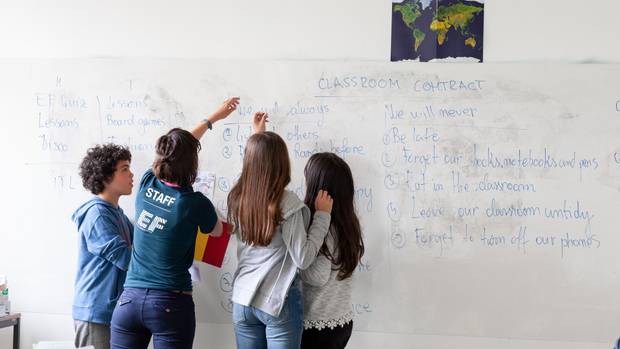
Closing Insight: Culture Changes at the Speed of Trust
Educational culture does not transform through urgency alone. It changes at the speed of trust, trust built through consistent practice, visible outcomes, and shared reflection.
One teacher cannot change everything. But one teacher can create a model that others cannot ignore.
And in education, that is often how real change begins, not loudly, but unmistakably.
[ To Fathom Your Own Ego, EGOfathomin ]